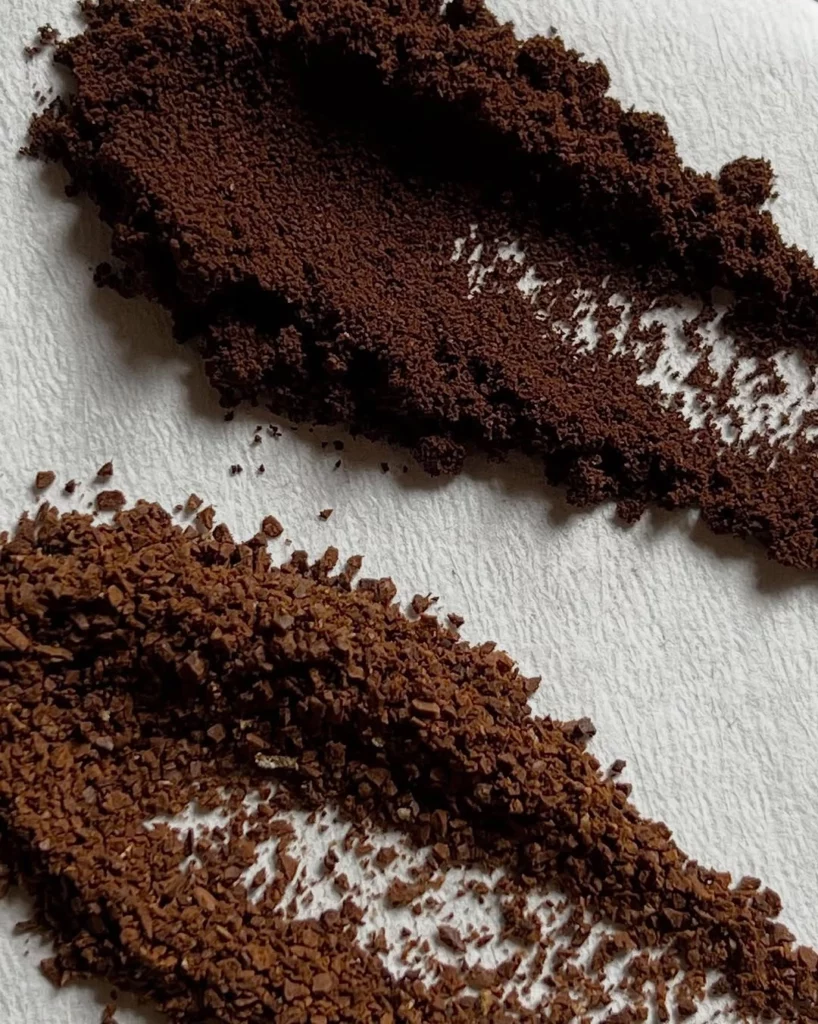

Most coffee mistakes trace back to one decision made before the water ever touches the grounds: coffee grind size. Get the ratio right, use great beans, time the steep perfectly — none of it matters if the grind doesn’t match the method. Grind size isn’t a detail you can eyeball. It’s the variable that decides whether extraction happens at all.
This guide breaks down exactly what grind size controls, how to match it to your brewing method, and how to diagnose a bad cup in under ten seconds.
What Coffee Grind Size Actually Controls
Extraction is a function of surface area and contact time. Finer grounds expose more surface area, so water pulls flavor out faster. Coarser grounds expose less, slowing extraction to match longer brew times.
This is why the exact same coffee, ground wrong, can taste both bitter and weak depending on the method. Fine grounds in a French press over-extract in the first few minutes and leave sediment in your cup. Coarse grounds in an espresso machine under-extract almost instantly, producing something sour and thin no matter how good the beans were.
Coffee grind size, in other words, is the setting that tells your method how fast to work.
Coffee Grind Size by Brewing Method
Not every method needs the same grind. Here’s how the major brewing styles line up, from coarsest to finest.
Coarse Grind: French Press and Cold Brew
Think sea salt, not sand. Coarse grounds give a four-minute steep enough resistance to extract fully without turning bitter. They’re also large enough for a metal mesh filter to catch cleanly — the single biggest fix for gritty, sediment-heavy French press coffee.
Cold brew uses an even longer contact time (12–24 hours), so it tolerates — and needs — a similarly coarse grind to avoid over-extraction and excess bitterness.
Medium Grind: Drip and Pour Over
Closer to granulated sugar. Water passes through once, at a steady pace, so the grind needs to be fine enough to extract fully in that single pass but coarse enough not to clog the filter or slow the drawdown to a crawl.
Fine Grind: Espresso and Moka Pot
Closer to table salt, sometimes finer. Contact time is measured in seconds under pressure, so the grind has to be fine enough to create resistance. Without it, water rushes through and meaningful extraction never really starts — this is the most common cause of thin, sour espresso shots.
The Grinder Problem Nobody Talks About
Grind size only matters if your grinder can hit it consistently, and that’s where most home setups fall short.
Blade grinders — the small propeller-style ones — don’t produce a uniform grind. They chop unevenly, leaving a mix of fine dust and large chunks in the same batch. That inconsistency is often the real reason a technically correct recipe still tastes off.
If your coffee tastes different every time you brew it — same beans, same method, same everything else — the grinder is usually the reason, not you.
A burr grinder crushes beans between two consistent surfaces instead of chopping them randomly. It’s the single upgrade that fixes more bad cups than any change in beans, water temperature, or ratio combined. According to the Specialty Coffee Association’s brewing standards, grind consistency is one of the core variables controlled in professional cupping and brewing protocols — which tells you how much it actually matters, even outside a lab setting.
How to Diagnose Coffee Grind Size Problems
You don’t need a photo reference to figure out what went wrong. The cup itself tells you:
- Bitter, harsh, or ashy → grind too fine for the method. Extraction went too far.
- Sour, weak, or watery → grind too coarse for the method. Extraction didn’t go far enough.
- Muddy texture or gritty sediment (French press specifically) → grind too fine, or the mesh isn’t sealing fully against the glass.
Adjust one notch at a time and taste again before making a second change. Coffee grind size is the fastest, cheapest fix available in brewing — no new equipment required, just a turn of the dial.
Grind Size and Freshness Work Together
One thing that catches people off guard: ground coffee stales far faster than whole beans, sometimes within 20–30 minutes of exposure to air. If you’re grinding ahead of time to save a step in the morning, you’re likely tasting staleness, not a grind problem. Grinding immediately before brewing removes that variable entirely and makes it much easier to diagnose everything else on this list accurately.
The Takeaway
Every brewing method covered on Vintage Bean House assumes the grind matches it. If a recipe isn’t turning out the way it’s described — for French press, pour over, or any other method — coffee grind size is the first place to check, before blaming the beans, the water, or the ratio.