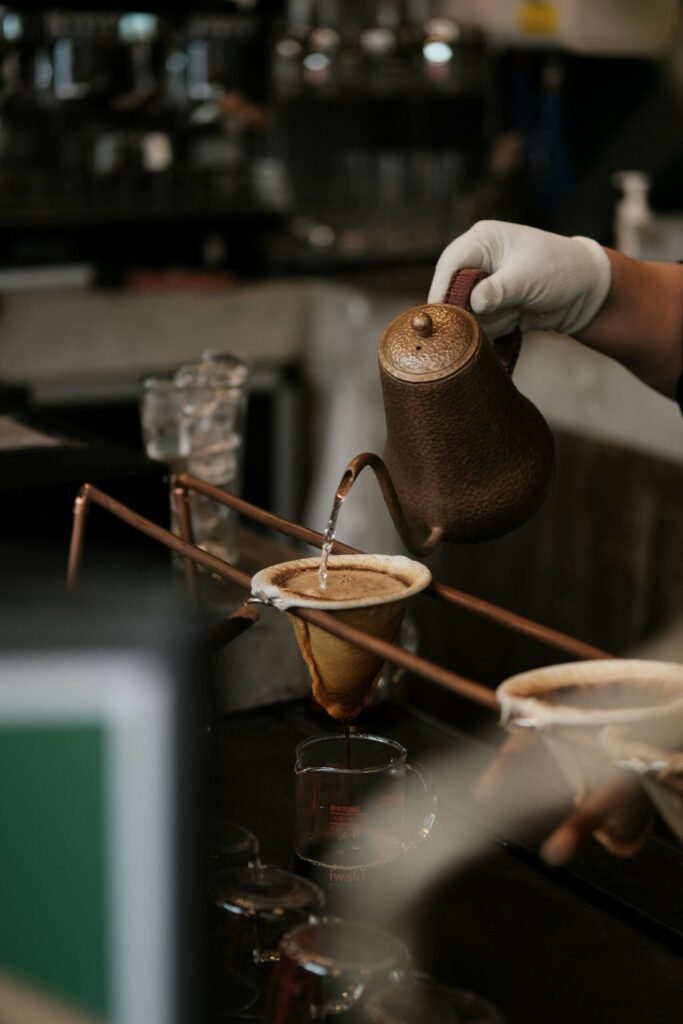


Water for coffee is roughly 98%. Every guide obsesses over beans, grind, and ratio, but it rarely gets the same attention — even though it makes up almost the entire cup. Bad water doesn’t just dilute good coffee. It actively changes how the coffee tastes, sometimes more than switching beans entirely.
This guide covers what’s actually in your water, how it affects extraction, and what to use instead if your tap water is working against you.
Why Water for Coffee Matters More Than You Think
Water isn’t a neutral carrier — it’s an active ingredient. The minerals dissolved in it, mainly calcium and magnesium, are what actually pull flavor compounds out of the coffee grounds during extraction. No minerals, weak extraction, flat coffee. Too many minerals, and extraction turns harsh or chalky no matter how careful you are with everything else.
This is why the same beans, same grind, same ratio can taste completely different in two houses on the same street — the water coming out of the tap isn’t the same.
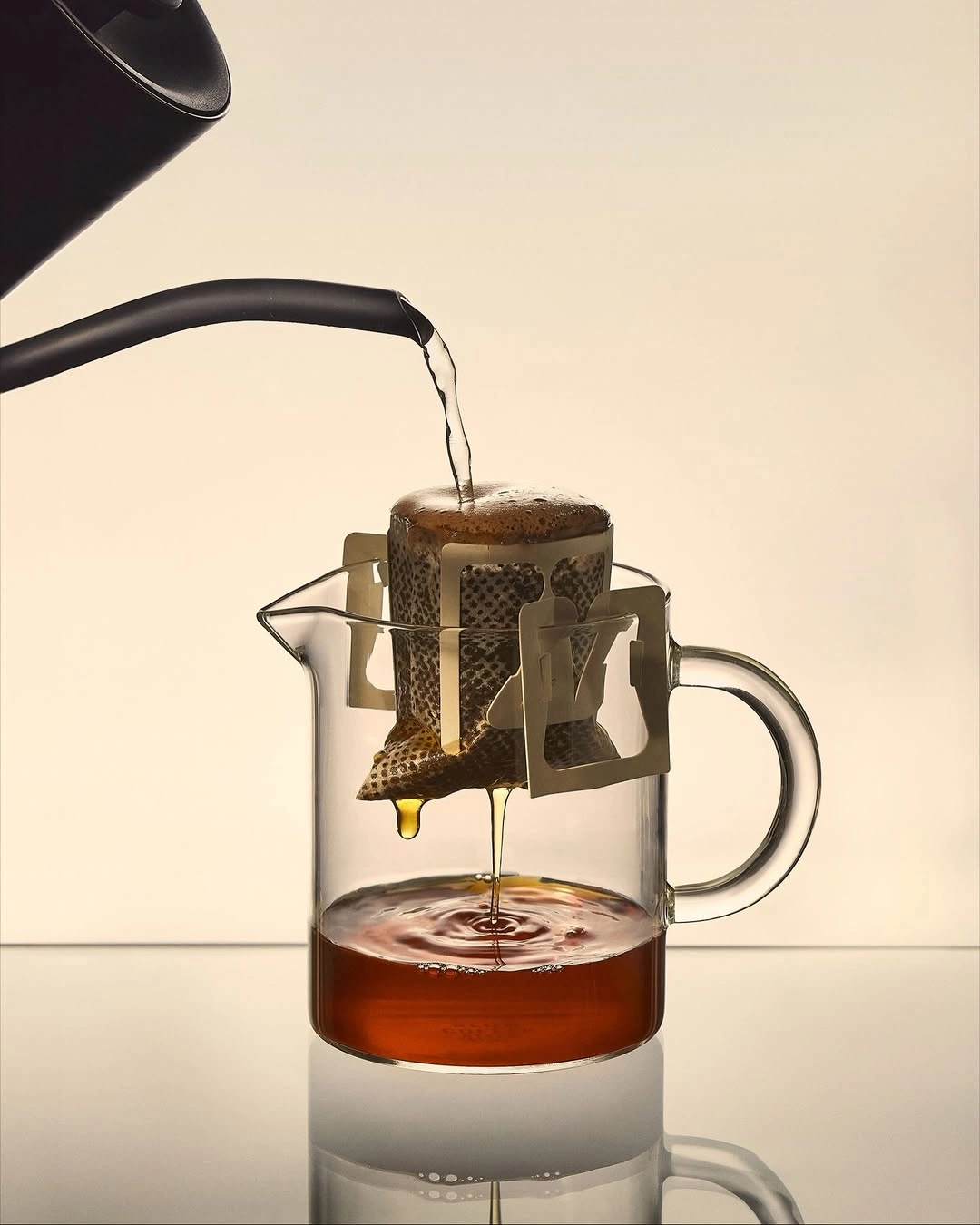
What’s Actually in Your Water
Two things determine how water behaves during brewing: hardness (mineral content) and filtration (what’s been removed, including chlorine and sediment).
Water That’s Too Soft
Distilled or heavily filtered water with almost no minerals sounds like the “clean” choice, but it under-extracts coffee. With nothing to grab onto the flavor compounds, the resulting cup tastes flat, sour, and thin — even with a perfect grind and ratio.
Water That’s Too Hard
Water with high mineral content, common in areas with hard tap water, over-extracts and often tastes chalky or metallic. It also leaves scale buildup inside kettles and espresso machines over time, which is its own maintenance problem.
The Sweet Spot
Most specialty coffee guidance points to a moderate mineral range — present enough to support extraction, low enough to stay clean-tasting. You don’t need to test your water in a lab to get close to this: filtered water (not distilled, not straight tap) lands in the right range for the vast majority of home setups.
Filtered, Bottled, or Tap?
- Tap water works fine in areas with moderate hardness, but if your water smells like chlorine or tastes strongly mineral, it will show up in the cup.
- A basic filter pitcher (the kind you already might use for drinking water) removes chlorine and softens hardness enough to make a noticeable difference, and it’s the easiest fix for most people.
- Bottled spring water can work well, but not all brands are equal — some are closer to distilled and will under-extract. Look for one with moderate mineral content rather than the lowest number on the label.
- Distilled water should be avoided on its own. It’s the one category that consistently produces flat coffee.
If you’ve upgraded your beans and your grinder and the coffee still tastes flat, the water is the next thing to check — not the next bag of beans.
According to the Specialty Coffee Association’s water quality guidelines, total dissolved solids in the range of roughly 75–250 ppm are considered suitable for brewing — a useful benchmark if you want to test your own water rather than guess.
Water Temperature by Brewing Method
Mineral content is only half the picture. Temperature determines how fast those minerals do their job.
Immersion Methods (French Press, Cold Brew)
For French press specifically, water between 195°F and 205°F (90°C–96°C) — just off a rolling boil — gives full contact time enough heat to extract properly without scorching the grounds. Pouring straight off the boil is one of the more common mistakes with this method.
Fast-Contact Methods (Espresso, Moka Pot)
These methods use less time, so slightly higher heat closer to 200°F–205°F helps compensate, though most machines and stovetop setups regulate this automatically.
Common Water Mistakes to Avoid
- Using water straight off a rolling boil — it’s hotter than needed and can scorch the grounds, producing a burnt or ashy taste.
- Reusing water that’s been boiled and reheated multiple times — this concentrates minerals and can flatten flavor over time.
- Ignoring a strong chlorine smell from the tap — if you can smell it in a glass of water, you’ll taste it in the coffee.
The Takeaway
Water for coffee isn’t a minor detail — it’s nearly the entire cup by volume, and it directly controls how well extraction works. Once your grind size and ratio are dialed in, water is the next variable worth checking, especially for French press and other immersion methods where the water sits with the grounds the longest.