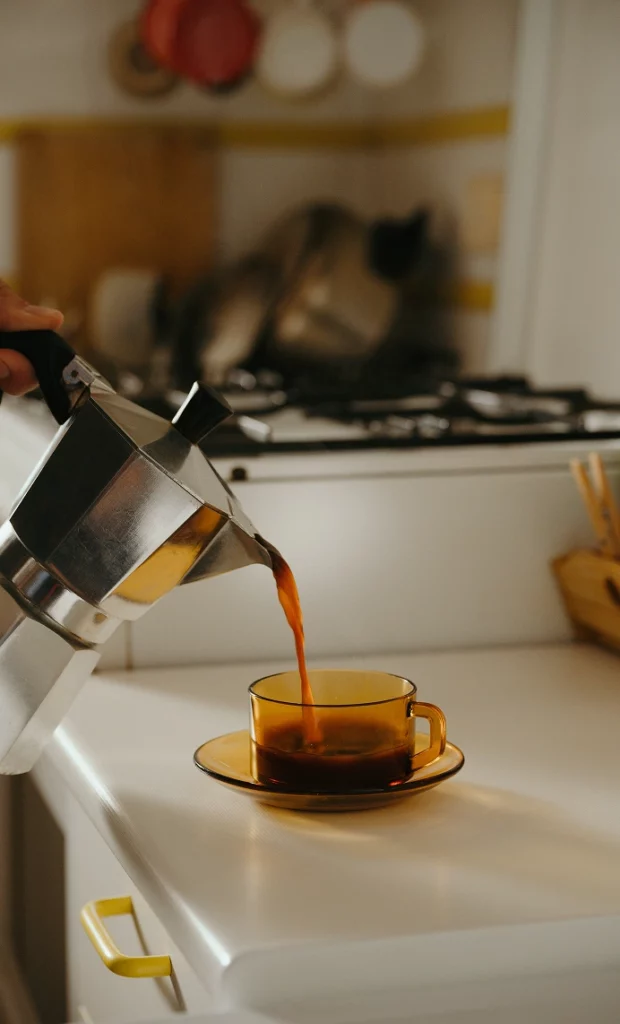

The moka pot has sat on Italian stovetops for nearly a century, and it still does something no other home brewing method quite replicates: it uses steam pressure, not gravity or immersion, to push water through the grounds. That single mechanical difference is why moka pot coffee tastes closer to espresso than to drip or French press, without needing anything close to an espresso machine.
This guide covers how the moka pot actually works, how to use one without ending up with bitter, over-extracted coffee, and where it fits next to other brewing methods.
How a Moka Pot Works
A moka pot has three chambers: a bottom chamber for water, a funnel-shaped filter basket for coffee grounds, and a top chamber that collects the finished coffee. As the water in the bottom chamber heats, steam pressure builds and forces the water up through a tube, through the grounds, and into the top chamber.
This is meaningfully different from drip coffee, where water simply flows downward through gravity, or French press, where grounds sit fully immersed in still water. The pressure involved — while far lower than a true espresso machine’s roughly 9 bars — produces a more concentrated, syrupy result closer in style to espresso than to any gravity-fed method.
A Brief History
The moka pot was patented in 1933 by Alfonso Bialetti, and the octagonal aluminum design has barely changed since. It became a fixture in Italian households specifically because it delivered something close to café-style coffee at home, decades before home espresso machines were affordable or practical. Today it remains one of the most recognizable pieces of coffee equipment in the world, largely unchanged from its original design.
How to Use a Moka Pot Correctly
Fill the Water Chamber to the Valve
Fill the bottom chamber with hot water (starting with hot water shortens brewing time and reduces the risk of a metallic taste from prolonged heating) up to, but not above, the pressure release valve.
Fill the Filter Basket, Don’t Pack It
Add medium-fine grounds — finer than drip, coarser than espresso — and level them off without tamping or pressing down. Packing the grounds too tightly restricts water flow and can cause excess pressure buildup or a stalled brew.
Brew on Low to Medium Heat
This is the step most people get wrong. High heat forces water through too quickly, producing a bitter, over-extracted result and a telltale sputtering sound. Low to medium heat gives a slower, more even extraction and is the single biggest factor separating good moka pot coffee from harsh, burnt-tasting coffee.
Remove From Heat at the First Gurgle
Once you hear a hissing, gurgling sound — signaling the water chamber is nearly empty and steam is starting to push through — remove the pot from heat immediately. Letting it continue past this point pulls through mostly steam and bitter compounds rather than flavorful coffee.
Common Moka Pot Mistakes
- Brewing on high heat — the most common mistake, and the main cause of bitter, burnt-tasting moka pot coffee.
- Tamping the grounds — moka pot grounds should be leveled, not packed. Tamping is an espresso technique that doesn’t translate here and can cause pressure problems.
- Using cold water in the bottom chamber — this extends brew time significantly and increases the chance of a metallic taste from the aluminum heating for too long.
- Letting it run all the way through — stopping at the first gurgle, not after the pot goes silent, keeps bitterness out of the final cup.
A moka pot rewards restraint more than any other method on the stovetop — low heat and early removal from the burner matter more than any other variable.
Moka Pot vs Espresso vs French Press
The moka pot sits in an unusual middle ground. It uses far more pressure than a French press but far less than true espresso, which means the result is genuinely its own category rather than a substitute for either.
Compared to a French press, moka pot coffee is more concentrated, has less sediment, and lacks the heavier mouthfeel that comes from full immersion — the French press method suits a slower, more deliberate ritual, while the moka pot suits a quicker, more concentrated cup closer to what you’d expect from a café.
Compared to true espresso, moka pot coffee lacks the crema and the very high pressure that defines espresso extraction, but it delivers a similarly bold, concentrated result without the equipment cost or learning curve of a machine.
Choosing the Right Roast and Grind
A medium to medium-fine grind works best — finer than drip, coarser than what you’d use in an espresso machine. Pairing that with the right roast level makes a real difference here: medium to dark roasts tend to hold up better to the moka pot’s concentrated, higher-pressure extraction than delicate light roasts, which can taste harsh or overly acidic when pushed through this quickly.
According to the Illy Coffee brewing resources, a company with deep roots in Italian coffee tradition, medium-fine grind and moderate heat remain the two variables most responsible for a well-balanced moka pot result — confirming what generations of home use have already shown.
The Takeaway
The moka pot has stayed relevant for nearly a century because it does something genuinely distinct: steam-pressure brewing that lands between drip coffee and true espresso, using equipment that costs a fraction of either alternative. Once you understand that it rewards low heat and early removal above almost everything else, it becomes one of the most reliable methods on this site — consistent, fast, and hard to get wrong twice.