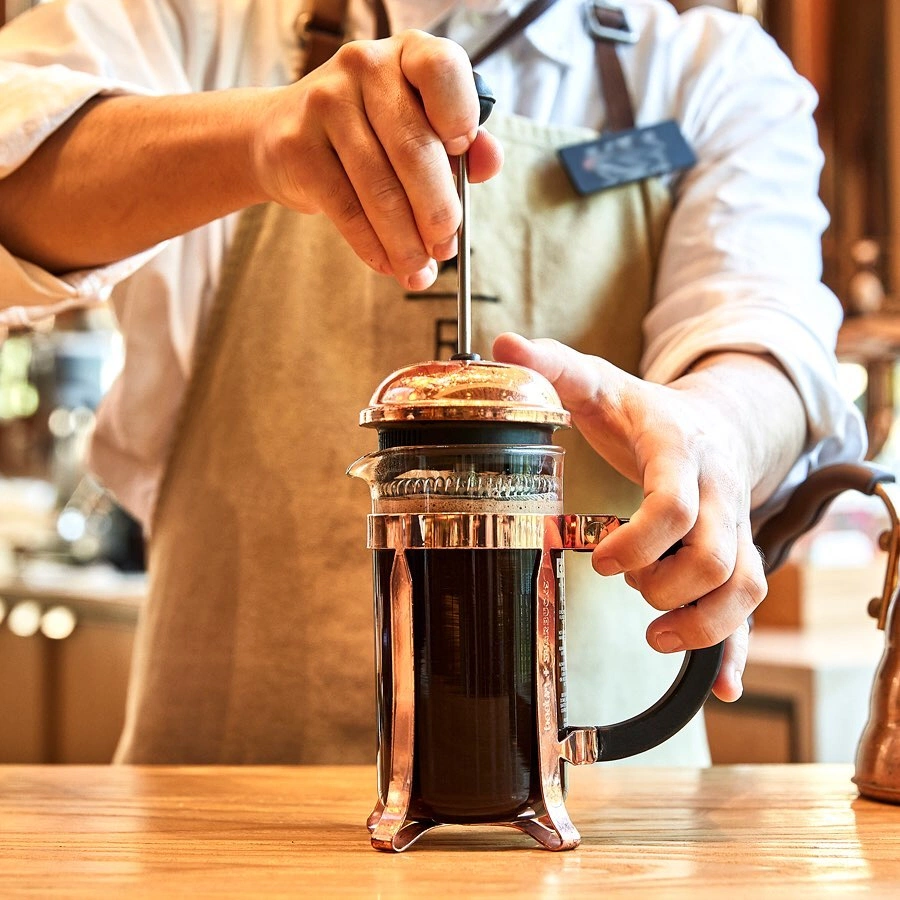
No pump, no paper filter, no electronics. The French press is the most direct way to brew coffee — full immersion, full control, and a cup with more body than almost any other method produces. This is where we cover everything: technique, common mistakes, and the reasoning behind each one.
The French press is the simplest brewing device in coffee, and that simplicity is exactly why it still matters. No pump, no paper filter, no electronics — just hot water, ground coffee, and time. What you get is a cup with more body and oil than almost any other method, because nothing stands between the grounds and your mug except a mesh screen.
That directness is also what makes it unforgiving. Get the grind wrong, or rush the steep, and you’ll taste it immediately. Get it right, and you’ll understand why this 19th-century design has outlasted almost every “smarter” brewing gadget that came after it.
What Makes the French Press Different
Most brewing methods fall into one of two camps: drip, where water passes through the grounds once and moves on, or immersion, where the grounds sit in water for the full extraction. The French press is immersion in its purest form — full contact, full control, no filtration until the very last step.
That single difference explains almost everything people notice about French press coffee: the heavier mouthfeel, the visible sediment, the fuller flavor. A paper filter strips out oils and fine particles. A metal mesh lets them through. Neither is “better” — they’re different tools for a different result, and the French press is the one that gets out of the way the least.
A Brief History Worth Knowing
Patents for a plunger-style pot appear as early as the 1850s, but the design most of us recognize today — glass carafe, metal plunger, mesh filter — was refined in Italy and France through the early 20th century. It never needed reinventing. Ninety years later, the same three parts still do the same job, which says more about the design than any marketing copy could.
Why We Keep Coming Back to It
There’s a reason the French press earns a permanent spot on the counter instead of the back of a cabinet: it asks something of you. You choose the grind, the ratio, the timing. Nothing adjusts itself. That’s not a limitation — it’s the appeal. In a category full of machines promising to remove the thinking from your morning, the French press does the opposite, and for a lot of coffee drinkers, that’s exactly the point.
Everything You Need to Get Started
The French press rewards a few specific decisions more than any other method. Get these right and the rest follows:
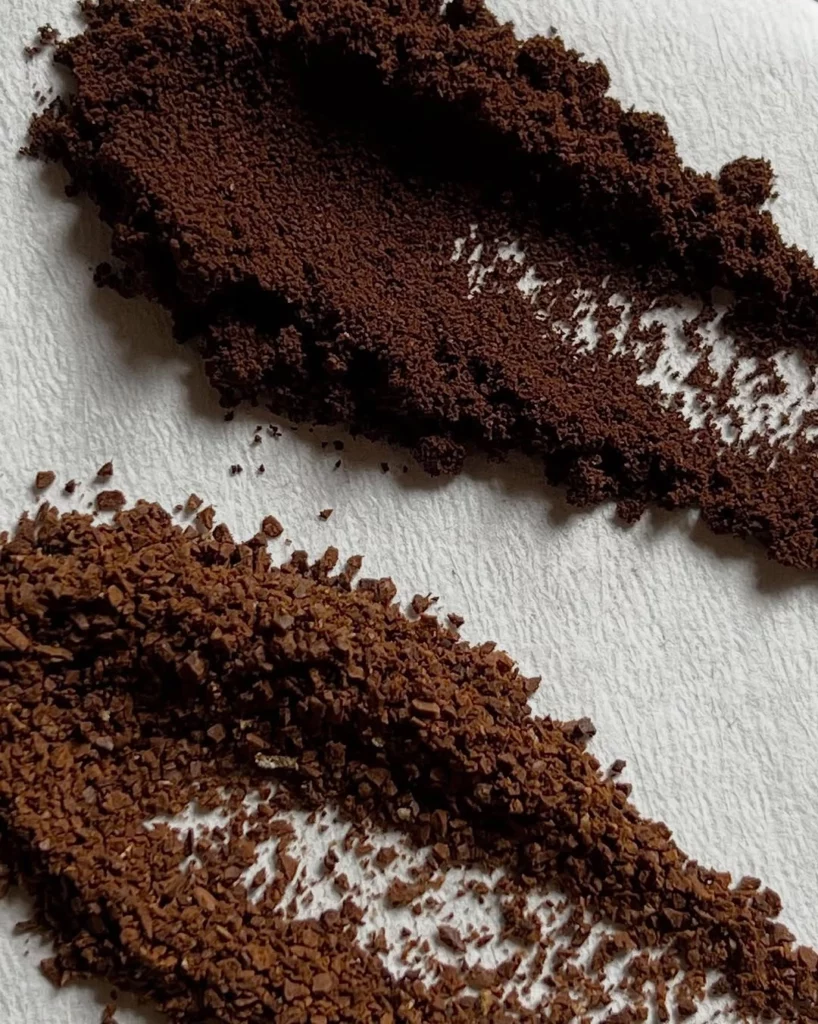
- Grind size — coarse, close to sea salt. Too fine, and you’ll get sediment and bitterness. For the full breakdown of why this matters more here than in almost any other method, see our guide on grind size.
- Water quality and temperature — just off the boil, and clean-tasting water matters more than people expect. We go deeper on this in how water shapes your coffee.
- The science behind extraction — if you want to understand why ratio and time behave the way they do, not just what numbers to use, that’s covered in the science of coffee extraction.
We’re not repeating those details here on purpose. This page is the map — the articles above are where the technique actually gets taught.
Common Mistakes to Avoid
Three issues account for almost every disappointing cup: grinding too fine, using water that’s actively boiling instead of just off it, and steeping past five minutes out of habit rather than intention. Each one is fixable in seconds once you know to look for it — again, the grind size guide above covers this in full.
Explore the French Press Cluster
Below, you’ll find the articles that build out everything covered on this page — from dialing in your grind to understanding what’s happening in the water itself. Start wherever your question is; each one stands on its own.