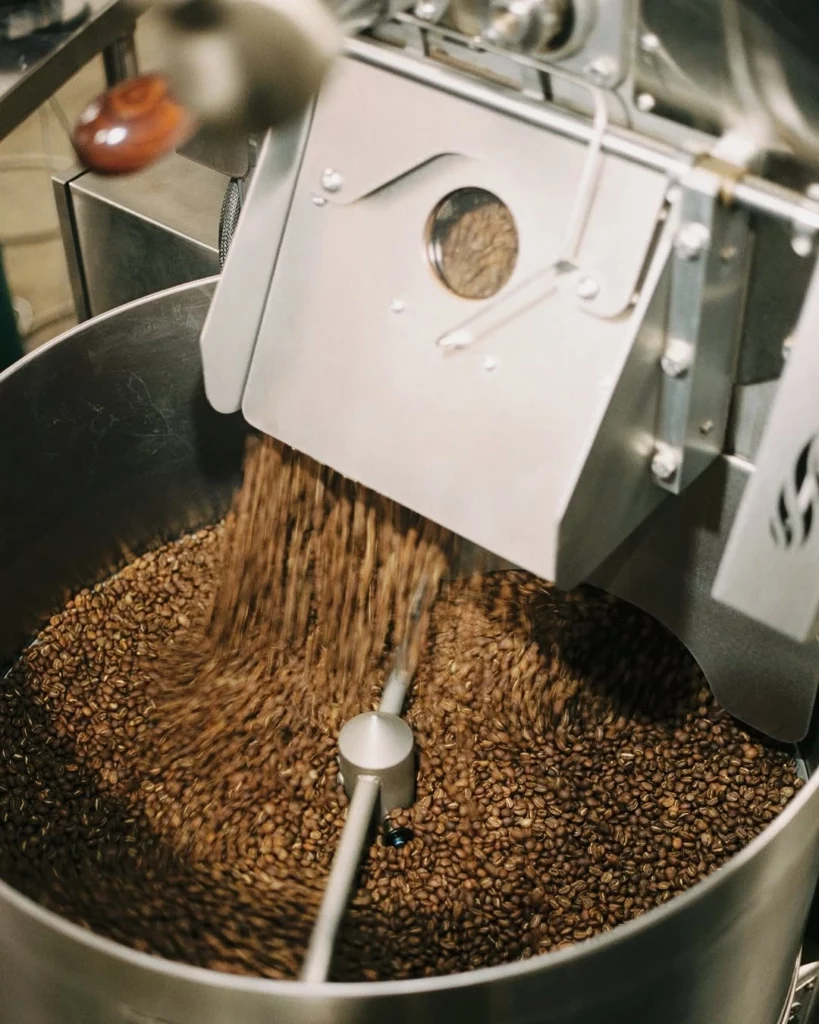


Coffee roast levels get treated like a matter of taste — “I like dark roast” or “I only drink light roast” — but roast level isn’t just a flavor preference. It’s a chemical process that determines how much of the bean’s original character survives, and how much gets replaced by the roasting itself. Two bags from the exact same farm, same harvest, same variety, can taste like entirely different coffees depending on how they were roasted.
This guide breaks down what actually happens at each roast level, and why the “right” one depends more on what you’re trying to taste than on any universal rule.
What Roasting Actually Does
Green coffee beans are dense, grassy, and essentially undrinkable. Roasting applies heat that triggers a series of chemical reactions — most notably the Maillard reaction and caramelization — that develop the aromatic compounds, acids, and sugars responsible for coffee’s flavor.
The longer and hotter the roast, the further those reactions progress, and the more the bean’s original character gets overtaken by the flavors roasting itself produces. This is the core trade-off behind every coffee roast level: origin character versus roast character.
The Coffee Roast Levels, Explained
Light Roast
Light roast beans are pulled early, often just after “first crack” — the audible popping sound that signals the bean’s structure is opening up. The beans stay light brown, dry-looking (no oil on the surface), and dense.
Because the roast process stops early, light roast preserves the most origin character: brighter acidity, more pronounced fruit or floral notes, and a lighter body. This is the roast level most specialty and single-origin coffee is roasted to, specifically because it shows off where the bean came from.
Medium Roast
Medium roast sits between first and second crack, with beans turning a deeper brown and developing a small amount of surface oil. This is the most common roast level in mainstream coffee, and for good reason — it balances origin character with roast-developed sweetness and body, producing a well-rounded cup without leaning hard in either direction.
Medium-Dark and Dark Roast
Past second crack, the bean’s sugars caramelize heavily and eventually begin to char. Origin character fades significantly, replaced by bittersweet, smoky, or bold flavors that come from the roasting process itself rather than the bean’s growing conditions. Surface oil becomes visible and often pronounced.
This is where most “bold” or “espresso roast” coffee lands. It’s not that dark roast has more caffeine or is inherently “stronger” in body — it simply tastes different because so much of the original bean flavor has been roasted over.
Does Roast Level Affect Caffeine?
This is one of the most persistent myths in coffee: dark roast is not higher in caffeine, and in most cases it’s very slightly lower by volume, since roasting causes beans to lose mass and expand. If you’re measuring by scoop rather than by weight, a dark roast scoop may actually contain marginally less caffeine than a light roast scoop of the same size, simply because dark roasted beans are larger and less dense.
Which Coffee Roast Level Should You Choose?
There’s no universally correct answer here — it depends on what you want the cup to taste like.
- Choose light roast if you want to taste the specific characteristics of where the coffee came from — fruit notes from an Ethiopian origin, for example, or the bright acidity typical of high-altitude Central American beans.
- Choose medium roast if you want balance — a cup that’s approachable, not too acidic, not too bitter, and forgiving of small brewing mistakes.
- Choose dark roast if you prefer bold, low-acidity flavor, or if you’re brewing espresso and want a roast profile built for that method’s short contact time.
Roast level isn’t a hierarchy from “beginner” to “expert” — it’s a dial for how much of the bean’s origin you want to taste versus how much roast character you want instead.
Roast Level and Brewing Method
Roast level and brewing method aren’t independent choices — they interact. Traditional Italian espresso is typically pulled from medium-dark to dark roasts because the concentrated, fast extraction of espresso pairs well with roast-developed sweetness and body. Pour over and drip methods, by contrast, are often paired with light to medium roasts because the slower, gentler extraction lets more of the origin’s acidity and nuance come through. Neither pairing is a hard rule, but it explains why a light roast pulled as espresso can taste unexpectedly sour — the roast and the method are working against each other.
How to Read a Bag of Coffee
Roast level isn’t always printed clearly, but a few cues help: lighter brown, dry-looking beans are light roast; noticeable oil sheen and a near-black color signal dark roast. According to the Specialty Coffee Association, roast level is typically measured using a standardized color scale (Agtron numbers) in professional settings — a more precise system than the “light/medium/dark” labels most retail bags use, but the visual cues above will get you close enough for everyday buying decisions.
The Takeaway
Coffee roast levels aren’t a spectrum from bad to good — they’re a trade-off between preserving where the coffee came from and developing flavors the roasting process creates on its own. Once you know which side of that trade-off you prefer, choosing a roast level stops being guesswork and starts being a deliberate part of getting the cup you actually want.